
The Forth Lab @RPI
Our lab is interested in understanding how large-scale cytoskeletal networks generate and respond to forces inside of cells, and to figure out how these mechanics contribute to the success of key cellular processes. We are particularly interested in how microtubule networks are organized and maintained during processes such as cell division and neuron growth. We are fascinated in understanding how nanometer-sized proteins work cooperatively to produce micron-scale cellular behaviors. And though decades of research has identified a majority of the biological ‘parts’ that are involved, we still do not understand the mechanical rules that dictate how all of these pieces work together to accomplish goals like the reliable segregatation of DNA into two new daughter cells or the establishment and maintenance of axons and dendrites in neurons.
Research Directions
Motor protein ensembles
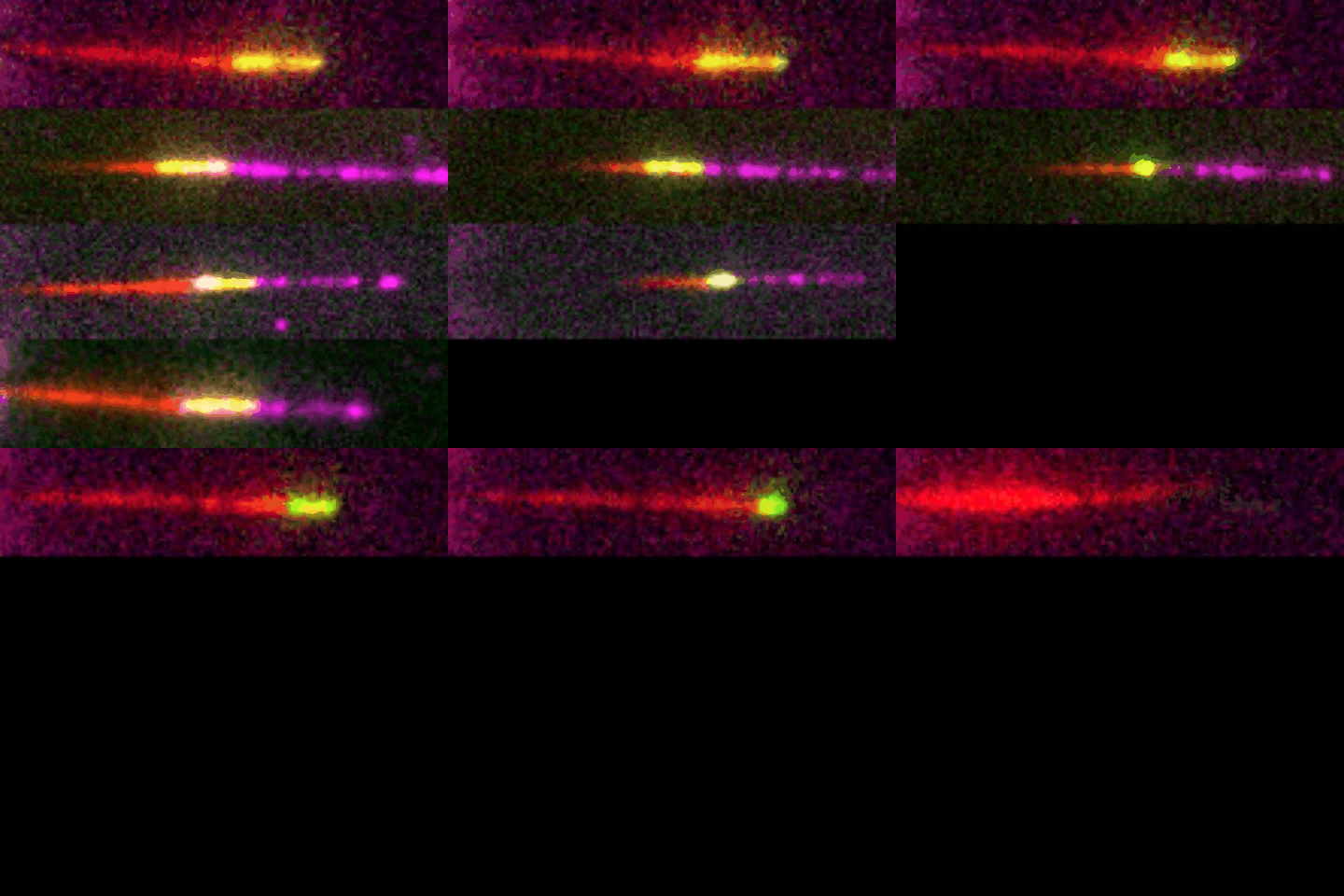
Many cellular processes require the coordination of teams of motor proteins to successfully function. We apply our biophysical toolkits to understand how force and speed are regulated by teams of motor proteins, such as kinesin-5 mediated microtubule sliding during mitosis.
Mitotic MAPs
The mitotic spindle is organized by a diverse array of microtubule-associated proteins, including those that tether or crosslink multiple filaments into higher order networks at the spindle midzone and poles. We aim to understand how these proteins interact to regulate the dynamics and mechanics that drive motions in the spindle.
Neuronal Microtubule Networks
Microtubules in axons and dendrites serve essential functions as both tracks for long-range cargo transport and structural support for the cell. The organizational principles of these networks and how specific MAPs contribute to both the development and maintenance of distinct microtubule arrays is unclear, and has become a recent focus in our lab.